by Gary Brown
Introduction
In previous blogs, I have reflected on how my upbringing and environment have shaped who I am. I recognise that my family, friends, education, and experiences of travel have all influenced not only who I am, but how I approach my role within the NLN.
The arts have also had a profound impact on me. The ability of people to use imagination, skill and creativity to express themselves has always resonated deeply. Hearing 2-Tone bands such as The Specials reflect on racism and encountering Keith Haring’s vibrant artwork advocating for social justice during my formative years, left a lasting impression. I often wonder what I learned in school, but I could easily articulate my learning through music, graphic design, photography, film and literature.
I have always loved reading. Writers such as John Steinbeck opened my eyes to the power of collective strength, while J.D. Salinger’s anti-hero, Holden Caulfield, in ‘Catcher in the Rye’ encouraged me to question the world around me.
Before starting this role, I was serendipitously reading widely on leadership – particularly books that challenged traditional, hierarchical notions of what leadership looks like. Several left a lasting impression, including ‘Leaders Eat Last’ by Simon Sinek and ‘Why Should Anyone Be Led by You?’ by Rob Goffee and Gareth Jones.
Leaders, Culture and Hierarchy
I am drawn to leaders who place people at the heart of their work. As Simon Sinek writes, “I admire leaders who believe in the value of culture. I respect leaders who put people first.”
Similarly, Goffee and Jones challenge conventional thinking – “Leadership is non-hierarchical. In fact, we would go so far as to say that the persistent misconception that people who occupy senior organisational positions are leaders has probably damaged our capacity to understand leadership more than anything else. It has blinded us to the true nature of leadership.”
I strongly identify with this perspective, and this is not to diminish the role of those in senior positions. I’d would just rather be involved in discussing an understanding of what leadership could be rather than accepting what some think it is.
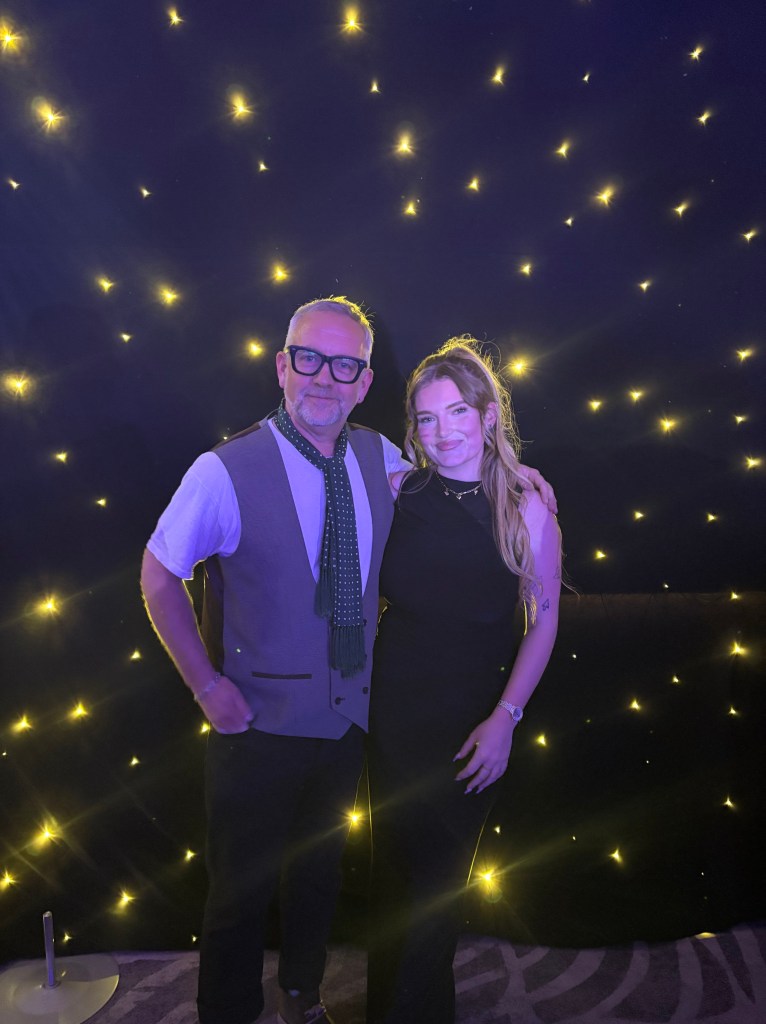
Recently, my colleague Susanne Richards reflected on my approach saying that “Gary doesn’t lead in a way that centres himself; he leads in a way that creates space for others. His approach, grounded in Community Learning and Development (CLD) principles, consistently challenges traditional ideas of hierarchy and authority.”
My Practice
Susanne’s reflections are lovely to hear and captures much of what I believe my NLN role is about. My approach has also been shaped by things I have observed throughout my working life that did not sit comfortably with me, including:
- Strategies developed by small groups (often the most senior or highly paid), where their ideas carry disproportionate weight.
- Lengthy reports and strategies written by a few and read by even fewer.
- Language such as “my team” or “my people” implying ownership rather than a shared purpose.
- Individuals relying on job titles to assert authority or influence.
- People saying they are co-producing work when they are not.
Individually and collectively, we can all do more to work in partnership, support and challenge each other and think deeply about our practice. I am sure we can all do more to reflect on and consider the structures we work in and how we carry out all our roles.
What I have often seen is that hierarchical systems can create frustration. People may direct dissatisfaction towards ‘the boss’ while feeling disempowered themselves. This can foster a ‘them and us’ culture, rather than a cohesive team. Instead of shared leadership, it becomes a model where many follow the direction of a few – often without question.
Nothing changes if nothing changes
We can all create change, no matter how big or small.
From my perspective, many of the structures and systems within the care experience community are hierarchical and formal. While I recognise that this is sometimes necessary, it isn’t always the case. There are clear possibilities for lived experience to play a more leading role in many contexts including greater access to paid positions and leadership opportunities. More can and should be done to cede power. Every decision made by one person is a missed opportunity for someone else to contribute.
The NLN has been fortunate to benefit from multiyear funding and a high degree of autonomy. However, as a project, we have made deliberate and conscious choices to operate differently from the norm. It has been intentionally designed to place lived experience at its centre and to prioritise relationships. From the outset, there has been a clear commitment to sharing and redistributing power.
I feel incredibly fortunate to work within the NLN in a way that truly aligns with who I am. I don’t feel the need to present a more ‘professional’ version of myself – I can show up authentically and encourage others to do the same.
I’m especially passionate about creating spaces where people can lead in ways that work for them. It’s amazing to see people grow and develop – taking on responsibility, stepping into new experiences, and finding their voice.
If the National Leadership Network has achieved anything over the past few years, I hope it has highlighted the importance of placing people with lived experience at the centre of decision-making that affects their peers. I also hope it has demonstrated how vital relational working is, and that our focus should always be on people, not just process.
Nothing changes if nothing changes. And change is something we can all be part of.


Leave a Reply